

Ashutosh Fibre IPO 2026 – Latest Update
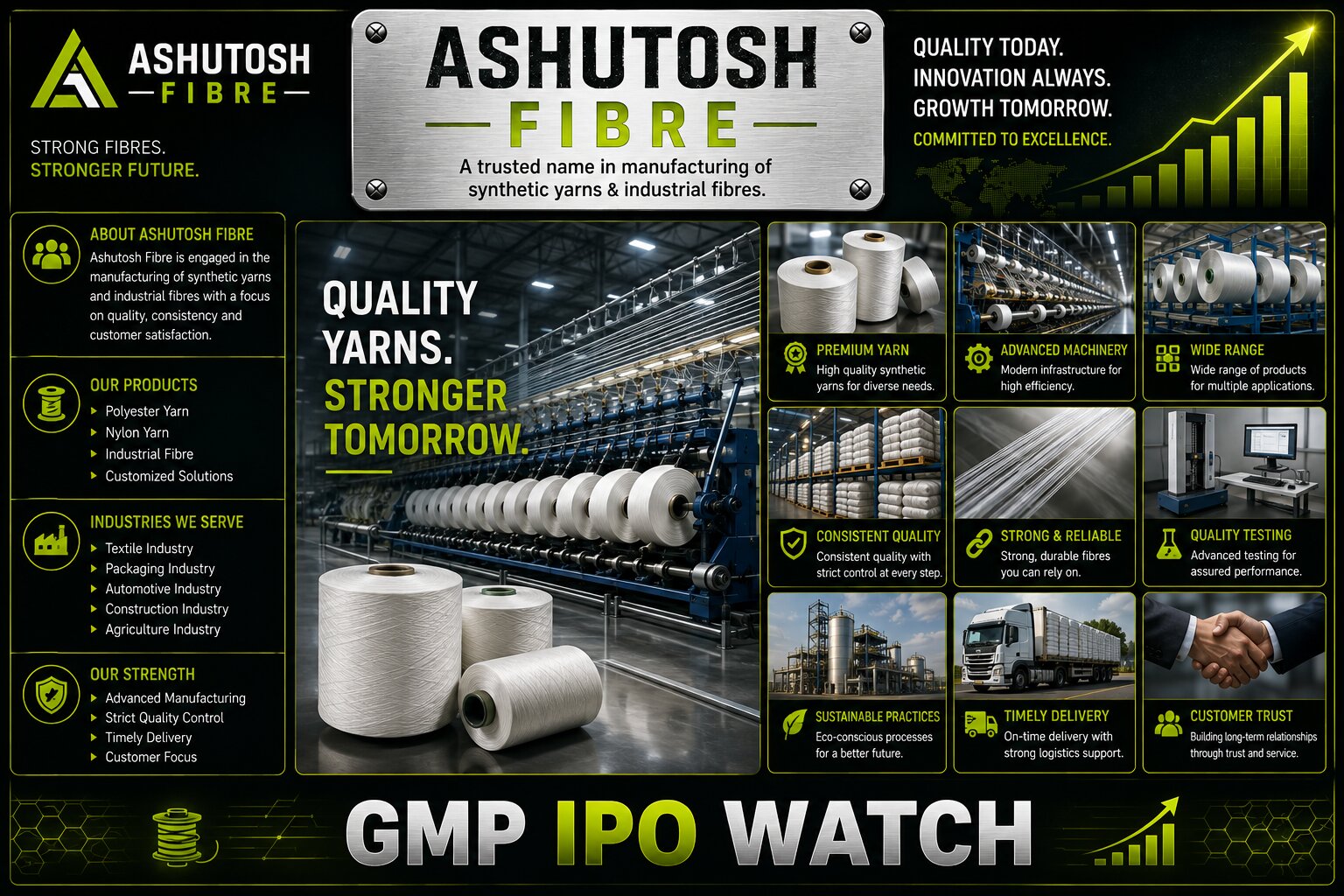
Ashutosh Fibre Limited is preparing to enter the SME IPO market with a fresh issue of equity shares. The company operates in the textile industry and is primarily engaged in the manufacturing and trading of yarn and textile-related products.
The IPO provides the company with an opportunity to raise fresh capital for business expansion, working capital and other corporate requirements.
Ashutosh Fibre IPO Details
| Particular | Details |
|---|---|
| IPO Type | BSE SME IPO |
| Issue Size | ~₹27 Crore |
| Issue Type | Fresh Issue |
| Price Band | ₹70 – ₹75 |
| Face Value | ₹10 |
| Lot Size | 2,000 Shares |
| Minimum Investment | ₹1,50,000 |
| IPO Platform | BSE SME |
| Business | Textile & Yarn Manufacturing |
The final bidding dates and allotment schedule should be checked against the latest exchange filing before publication, as SME IPO schedules can change.
What Does Ashutosh Fibre Do?
Ashutosh Fibre operates in the textile and yarn manufacturing industry.
Its business is connected with the production and supply of yarn used by textile manufacturers and other downstream customers.
The company operates in a competitive segment where factors such as:
cotton prices + synthetic fibre prices + power costs + yarn demand + export demand
can directly influence margins.
Textile Manufacturing Business
Yarn is an important intermediate product in the textile value chain.
The overall process broadly involves:
raw fibre → spinning → yarn → fabric → garment/home textile.
Ashutosh Fibre operates in the yarn portion of this chain.
Demand for its products is therefore influenced by the broader textile and apparel industry.
Why the Textile Sector Matters
India has a large textile manufacturing ecosystem covering cotton, synthetic fibres, yarn, fabric and garments.
The sector benefits from:
- Domestic apparel demand
- Export opportunities
- Growing organised textile manufacturing
- Government support for textile manufacturing
- Demand from garment and home-textile producers
However, the sector is also cyclical and highly competitive.
Raw Material Costs Are Important
One of the biggest factors affecting a yarn manufacturer's profitability is the cost of raw materials.
For cotton-based products, changes in cotton prices can significantly affect manufacturing costs.
For synthetic yarn, prices of relevant petrochemical-based raw materials can influence costs.
If raw-material prices increase faster than selling prices, profit margins can come under pressure.
Power Costs Also Matter
Textile manufacturing is energy-intensive.
Electricity and other operating expenses can therefore have a meaningful impact on the company's margins.
Efficient machinery and production processes can help control the cost per unit of yarn.
Investors should monitor whether the company is able to maintain margins during periods of higher energy and raw-material prices.
SME IPO Structure
Ashutosh Fibre's proposed IPO is structured as an SME issue.
This means investors should consider some differences compared with mainboard IPOs.
| Factor | SME IPO |
|---|---|
| Minimum Application | Generally higher |
| Liquidity | Can be lower |
| Price Volatility | Can be higher |
| Investor Base | More limited |
| Listing Platform | SME segment |
The reported lot size of 2,000 shares at the ₹75 upper band means an investor would require approximately ₹1.50 lakh for one lot.
Fresh Capital Can Support Growth
The fresh IPO proceeds are intended to strengthen the company's financial position and support its business requirements.
For a textile manufacturer, additional capital can potentially be used for:
working capital + machinery + production capacity + debt reduction + general corporate purposes.
The actual benefit will depend on how efficiently the company deploys the funds.
Key Strengths
The potential positives of Ashutosh Fibre include:
- Presence in the textile manufacturing value chain
- Exposure to yarn demand
- Participation in India's large textile industry
- Potential for capacity expansion
- Fresh capital through the IPO
- Opportunity to benefit from domestic and export textile demand
Major Risks
Investors should also consider:
- Cotton and fibre price volatility
- High energy costs
- Textile-sector cyclicality
- Strong competition
- Working-capital requirements
- Export-market fluctuations
- Foreign-exchange movements
- Changes in textile demand
- SME IPO liquidity risk
- High minimum investment requirement
For a yarn manufacturer, margin management and working-capital efficiency are particularly important.
What Investors Should Track
| Metric | Why It Matters |
|---|---|
| Revenue Growth | Demand expansion |
| EBITDA Margin | Manufacturing efficiency |
| PAT Growth | Profitability |
| Capacity Utilisation | Asset efficiency |
| Raw Material Cost | Margin pressure |
| Power Cost | Operating efficiency |
| Inventory | Working-capital management |
| Receivables | Cash-flow quality |
| Debt | Financial risk |
| Export Revenue | International exposure |
Final View on Ashutosh Fibre IPO
Ashutosh Fibre represents an SME IPO opportunity in India's textile and yarn manufacturing sector. The reported price band of ₹70–₹75 and proposed issue size of around ₹27 crore position it as a relatively small-capitalisation public issue.
The company's prospects will depend on its ability to manage raw-material costs, energy expenses, production utilisation and working capital while maintaining demand for its yarn products.
Overall, Ashutosh Fibre's textile-sector exposure and fresh IPO capital are the key positives, while commodity-price volatility, competition, cyclicality and SME-market liquidity remain the major factors investors should evaluate before making an investment decision.





Loading comments...